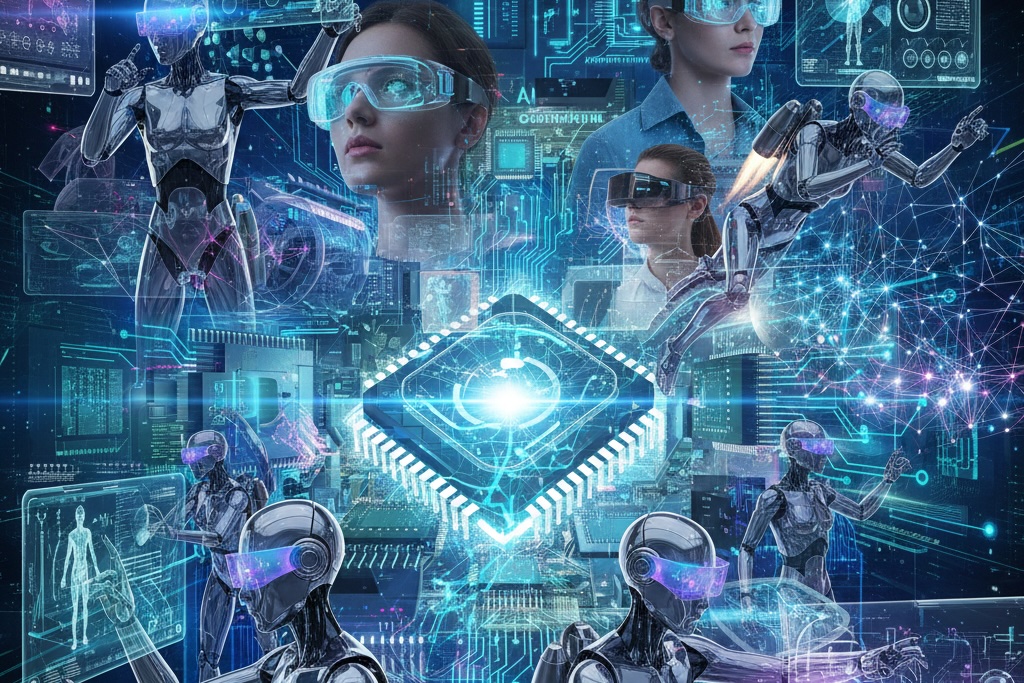
1) Brain-Computer Interfaces (BCIs) Move Beyond the Lab
Brain-computer interfaces are shifting from research prototypes toward early real-world applications. Instead of using hands, voice, or touch.
BCIs aim to translate neural signals into commands—like moving a cursor or triggering actions on a device.
- Why it matters: BCIs could redefine accessibility, rehabilitation, and how humans interact with computers.
- What to watch in 2026: Progress in safety, reliability, and less-invasive approaches that reduce barriers to adoption.
2) Generative AI Becomes the Default Layer for Content
Generative AI is quickly becoming a standard tool in writing, design, audio, and video production. What used to require specialized software
and teams is increasingly accessible through AI-assisted workflows.
- Why it matters: Creation gets faster, cheaper, and more personalized—at massive scale.
- What to watch in 2026: Multimodal models that handle text, images, video, and audio in a single workflow—plus stronger provenance and watermarking.
3) AI Agents Start “Doing the Work,” Not Just Answering Questions
The big shift: AI systems that plan and execute multi-step tasks end-to-end. Instead of prompting an assistant repeatedly,
you delegate outcomes—build a site, analyze data, draft a campaign, or resolve a support request—while the agent handles the steps.
- Why it matters: Productivity leaps when execution becomes automated, not just ideation.
- What to watch in 2026: Reliable tool-use, permissioning, logging, and guardrails so agents can operate safely in real-world systems.
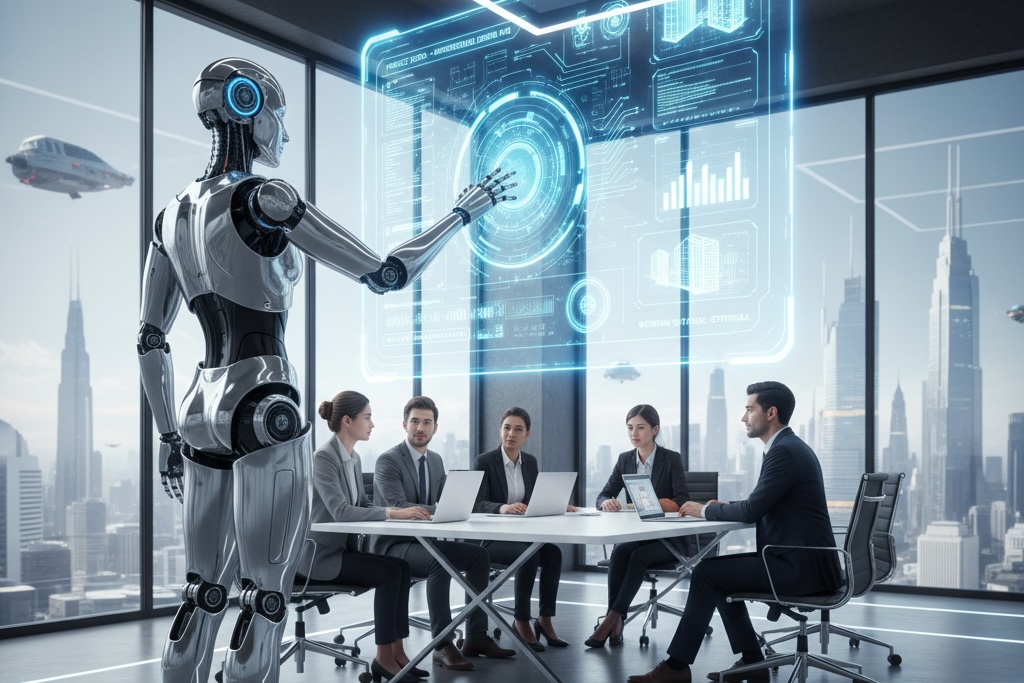
4) Humanoid Robots Go Commercial
Humanoid robots are moving from demos to practical deployments—especially in manufacturing, warehousing, and repetitive physical tasks.
Improvements in balance, vision, and dexterity make them more useful, while costs trend downward.
- Why it matters: Labor shortages and safety concerns make automation attractive for physically demanding roles.
- What to watch in 2026: Broader pilots, measurable ROI, safer human-robot collaboration, and clearer regulations.
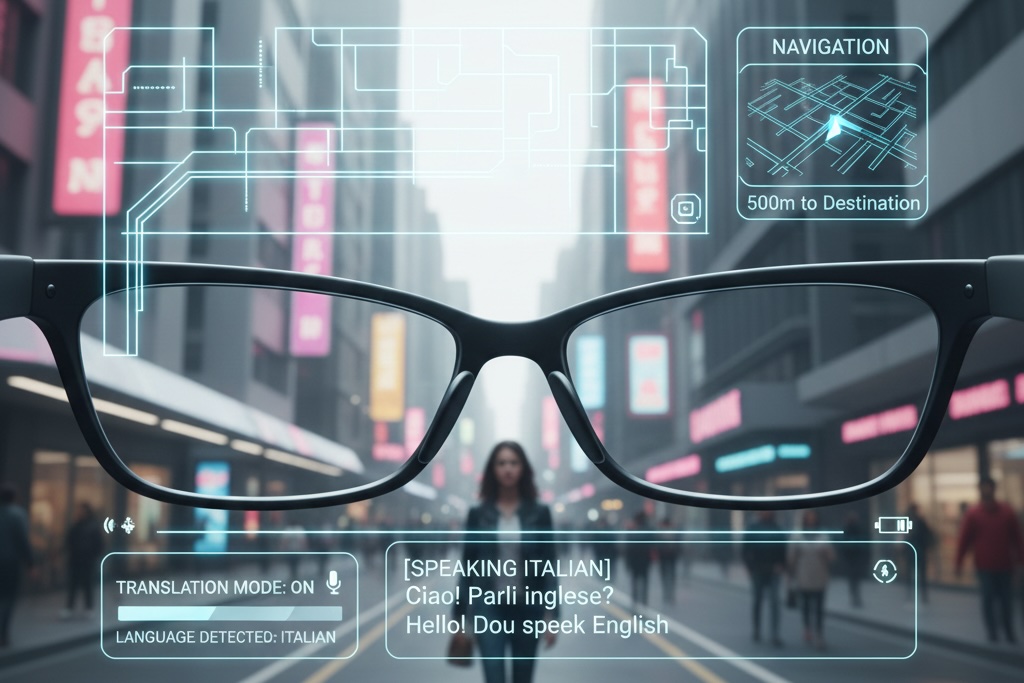
5) AR Glasses Start Replacing Screens in Everyday Moments
Lighter, smarter augmented reality glasses aim to bring “glanceable” information into your field of view—navigation, captions,
translation, instructions, and contextual prompts—without constantly pulling out a phone.
- Why it matters: Interfaces shift from handheld screens toward ambient, always-available overlays.
- What to watch in 2026: Comfort, battery life, privacy indicators, and genuinely useful “killer apps” beyond novelty.
6) Quantum Computing Inches Toward Practical Utility
Quantum computing is still early—but the direction is clear: more capable hardware, stronger error correction research, and a growing ecosystem
exploring where quantum could outperform classical systems (chemistry simulation, optimization, materials science).
- Why it matters: Some problems become dramatically faster to solve once the tech reaches usable stability.
- What to watch in 2026: Better demonstrations on real workloads, not just theoretical benchmarks.
7) AI-Native Operating Systems
AI is being integrated directly into operating systems, not just apps. That means your computer can help summarize files,
draft messages, search settings, automate actions, and provide contextual help without switching tools constantly.
- Why it matters: The OS becomes a “co-pilot” for everyday digital work, not a passive launchpad.
- What to watch in 2026: On-device performance, privacy controls, and clear user choice over what’s automated.
8) On-Device AI + Edge AI Chips Everywhere (Privacy-First by Design)
More AI workloads are shifting to local devices—phones, laptops, and embedded systems—thanks to dedicated neural processors.
This reduces latency, improves reliability, and can keep sensitive data off the cloud.
- Why it matters: Faster experiences, better privacy, and AI that works even with limited connectivity.
- What to watch in 2026: “Hybrid AI” designs—local for private tasks, cloud for heavy lifting—plus transparent privacy dashboards.
9) Smart Infrastructure & IoT 2.0
Sensors and connected systems are moving from scattered gadgets to coordinated infrastructure—traffic optimization,
supply chain monitoring, environmental sensing, and smarter public services.
- Why it matters: Cities and businesses can respond in real time, cutting waste and improving efficiency.
- What to watch in 2026: Security upgrades, device management at scale, and standards that reduce fragmentation.
10) Low-Code / No-Code Development Becomes Mainstream
Building tools is no longer limited to traditional software teams. Low-code and no-code platforms let people assemble apps and workflows
with visual builders, templates, and integrations—often with AI assisting along the way.
- Why it matters: Teams can move faster, prototype cheaply, and automate internal processes without waiting in a dev queue.
- What to watch in 2026: Better governance (permissions, auditing, security), and stronger integration with enterprise systems.
What This Means for 2026
The defining pattern is convergence: AI isn’t just a tool—it’s becoming an operating layer across devices, workplaces, and physical systems.
At the same time, robotics and spatial interfaces are pushing computing out of the screen and into the real world.
The winners in 2026 won’t be the people who “learn everything.” They’ll be the ones who build smart workflows, pick the right tools,
and stay adaptable as these trends accelerate.
Quick FAQ
Which trend will impact daily life the fastest?
AI-native operating systems, on-device AI, and AI agents—because they integrate directly into tools people already use every day.
Which trend has the biggest long-term upside?
Brain-computer interfaces and quantum computing—higher risk, longer timelines, but potentially massive impact if key technical hurdles fall.
What should businesses prioritize?
Workflow automation with strong governance, privacy-first implementation, and practical pilots for AI agents—measuring ROI and risk carefully.
Your turn: Which of these trends do you think will surprise people the most in 2026?